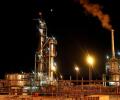
India's import of discounted crude oil from the Russian Federation hit an all-time high in May, with state-run refiner IOC becoming the biggest importer of Russian oil, relegating Reliance Industries to the second place, trade and shipping data show. Indian imports of Russian oil, accounting for over 46 per cent of its total crude oil imports in May, have grown after strong backing by New Delhi, with state-run refiners powering imports of discounted crude. Discounts on Russian oil average around $10 a barrel, said an official from a state-run refiner. IOC's May purchases rose by 64 per cent on the month, and accounted for half of its total crude imports last month, ship tracking data show.

On April 5, the Empowered Group of Ministers put a cap on size for SEZ to 5,000 hectares after land acquisition in Nandigram, West Bengal turned violent killing 14 persons in police firing.
In anticipation of the IPOs of FCH and RPL, investors were seen off loading small and mid-cap stocks heavily.
Reliance Industries Limited on Wednesday became the first Indian company to hit the Rs 19 lakh crore market valuation mark following a rally in its share price. The market heavyweight stock jumped 1.85 per cent to its record high of Rs 2,827.10 on the BSE. Following the gain in the share price, the company's market valuation jumped to Rs 19,12,814 crore in morning trade on the BSE.
The combined market capitalisation (m-cap) of five of the country's top10 firms grew by Rs 35,237.57 crore (Rs 352.37 billion) during last week, with Coal India emerging as the second most valued company after Reliance Industries.

The market capitalisation of BSE-listed firms jumped to an all-time high of Rs 304.53 lakh crore on Wednesday, buoyed by an unprecedented rally in equities where the BSE benchmark Sensex ended over the 67,000-mark for the first time ever. Rallying for the fifth day running, the 30-share BSE Sensex climbed 302.30 points, or 0.45 per cent, to end at its lifetime closing high of 67,097.44 points. During the day, it jumped 376.24 points, or 0.56 per cent, to reach its all-time intra-day peak of 67,171.38 points.

Polarisation and the increase in index weight of a few a stocks have weighed on performance. The worst performers include Nippon India Large Cap and HDFC Top 100 (2.6 per cent).
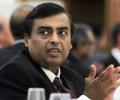
In the list of top-five domestic firms, RIL was placed at the top of the pack followed by TCS, HDFC Bank (Rs 6,50,136.04 crore), HDFC (Rs 3,85,207.96 crore) and HUL (Rs 3,76,545.49 crore).

Investment in market leaders with a safety-first approach could yield reasonable returns across sectors.
The Sensex finally closed with a gain of 52 points at 7,944 on the first day of the Samvat year 2062.\n
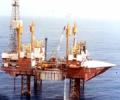
In line with the broader market, shares of ONGC on Tuesday surged nearly one per cent to touch an intra-day high of Rs 1,415 thus, fuelling the market capitalisation of the firm to a whopping Rs 3,00,511 crore (Rs 3,005.11 billion) in the morning trade.


Good growth prospects and reasonable valuations will help select mid-caps deliver superior returns, say experts.

IT major nears $100 bn m-cap, accounts for 61% of the group's combined valuation.

Three fund managers share their views and state where they are looking for value.
Shares of CDMA technology pioneer Qualcomm have come under tremendous pressure over the past one month, losing a market cap of $11.7 billion on the back of Reliance Communication, one of its major customers, mulling the option of switching to GSM.

While Tata Consultancy Services, HUL, ITC and Infosys saw a rise in their market capitalisation (m-cap) for the week ended Friday, RIL, HDFC Bank, HDFC, Maruti Suzuki India, SBI and Kotak Mahindra Bank suffered losses.

Monday's steep fall turned Sensex's yearly returns to - 2.57%, but only two large-cap funds did worse.
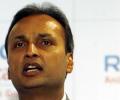
Exuding confidence in setting up a profitable banking venture, industrialist Anil Ambani on Tuesday said the proposed bank will help lower Reliance Capital's debt to one-fourth of current levels and would be listed as a separate entity in three years.
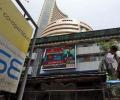
Among the Sensex constituents, as many as 16 stocks closed with losses with Nestle India, Kotak Mahindra Bank, IndusInd Bank, Bajaj Finserve, Titan and JSW Steel being the major laggards. Index major Reliance, Hindustan Unilever, Maruti and Tata Steel also declined due to selling pressure. In contrast, NTPC, TCS, Tech Mahindra, Bajaj Finance bucked the trend and ended the day in green. Axis Bank, Bharti Airtel, Mahindra & Mahindra and Tata Motors also defied the trend.

Shares of RIL rose by over 1 per cent to a multi-year high of Rs 1,410 on BSE
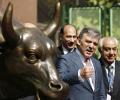
In 2008, the 13 companies on the list accounted for 34 per cent of the overall m-cap.
Gross refining margins may decline sequentially but improving petro-chem margins will boost earnings

RTL is part of Europe's largest media firm, Bertelsmann AG, and has a market cap of $15.5 billion (Rs 69,900 crore).
Jio Financial Services, the demerged financial services unit of Reliance Industries, will be listed on bourses on August 21, according to an exchange notification. Jio Financial Services Ltd (JFSL) demerged from Reliance last month and is currently listed under a dummy ticker after its price discovery at Rs 261.85 but there is no trading happening in the scrip. The listing on BSE and NSE has been scheduled a day before FTSE Russell plans to drop JFSL from its indices.
Trai has announced that it may fix prices of pay channels on the direct-to-home (DTH) platform in line with the Rs 5 per channel cap on conditional access system (CAS) services in Delhi, Mumbai and Kolkata. This move will lower the fees but hit the income of broadcasters from DTH companies. However, new DTH entrants will benefit from the move as their cost of content will decrease. For the 2 existing DTH companies, Dish TV & Tata Sky, the current rates are likely to continue.
Among the Sensex constituents, 20 stocks ended the session in green with HDFC Bank, Titan, Tech Mahindra, and Asian Paints being the major gainers. TCS, Maruti, Kotak Mahindra Bank and Bajaj Finserve were the other gainers. In contrast, SBI, Bharti Airtel, JSW Steel, PowerGrid, ITC and Reliance closed the trading with losses.

Trai had asked the Attorney General for views on Jio's free voice and data offering till March 2017, that rivals have termed predatory.
In dollar terms, TCS' market valuation rose to $84 billion.

RIL was placed at number one position, followed by TCS, HDFC Bank, HUL, HDFC, ITC, State Bank of India, Infosys, Kotak Mahindra Bank and ICICI Bank.

Among the Sensex shares, Infosys rose the most by 1.37 per cent, followed by Larsen & Toubro (0.90 per cent), and Wipro (0.83 per cent). HDFC Bank, ICICI Bank, Reliance Industries, ITC, TCS, Kotak Bank, Asian Paints and Titan were among the lead gainers.
Investors in Anil Ambani group firm Reliance Communications have reaped a windfall with the company adding over Rs 50,000 crore (Rs 500 billion) in its market cap since its listing on the bourses last year.

TCS, HDFC Bank, Infosys and Kotak Mahindra Bank were the other firms in the top-10 list which witnessed a rise in their market capitalisation. On the other hand, HUL, HDFC, Bharti Airtel, ITC and ICICI Bank finished with losses.

Tata Steel, Tech Mahindra, NTPC, JSW Steel, Power Grid, UltraTech Cement, HCL Technologies and HDFC Bank were among the major gainers. Bharti Airtel, Hindustan Unilever, Axis Bank, Reliance Industries, Kotak Mahindra Bank, ICICI Bank and IndusInd Bank were among the laggards.
Five of the 10 most valued firms added Rs 62,508.32 crore to their total market valuation last week, with Reliance Industries emerging as the biggest gainer. Hindustan Unilever Limited, HDFC, State Bank of India and Bharti Airtel were the other gainers while Tata Consultancy Services, HDFC Bank, Infosys, ICICI Bank and Bajaj Finance took a hit in their market valuation. The market capitalisation (mcap) of Reliance Industries jumped Rs 23,582.73 crore to reach Rs 15,37,600.23 crore at close on Thursday, becoming the biggest gainer among the top-10 firms.

Actively-managed large-cap mutual fund (MF) schemes have managed to regain some lost sheen this year after faring poorly in the 2022 calendar year (CY22). At the end of the first six months (H1) of CY23, 78 per cent of the active large-cap schemes were ahead of the Nifty50 index funds as against just 26 per cent in 2022. When compared to the Sensex index funds, 61 per cent active funds have delivered better returns, shows an analysis of Value Research data.
To be fair, one year is too short a period to judge the schemes' performance.
